
Sudan’s Forgotten Catastrophe: What the World’s Largest Humanitarian Crisis Reveals About the Failure of Global Governance
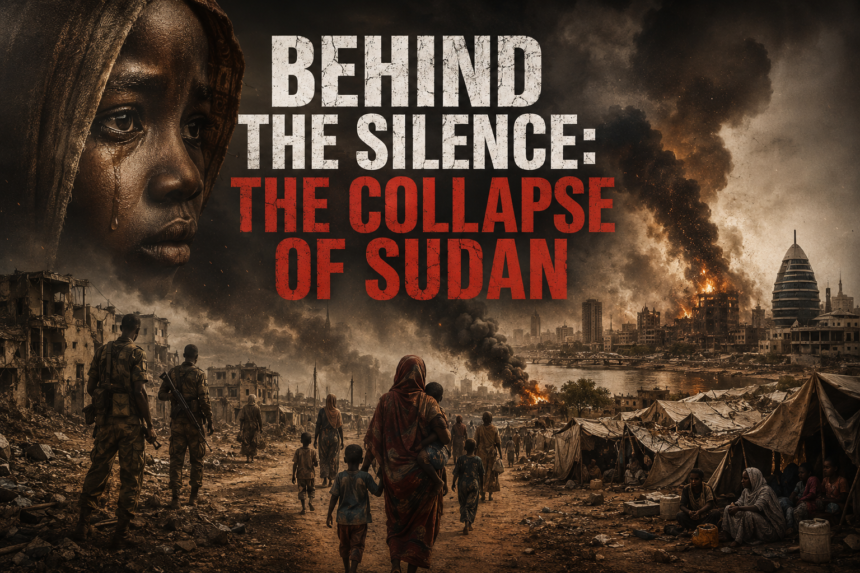
The humanitarian crisis unfolding in Sudan represents one of the most severe catastrophes of the modern era, yet it remains shrouded in deep international neglect. As the brutal conflict between the Sudanese Armed Forces and the Rapid Support Forces enters its fourth devastating year, millions of civilians find themselves trapped in a collapsed state. Despite the staggering scale of suffering, the situation in Sudan receives only a fraction of the diplomatic leverage, financial aid, and media attention dedicated to other contemporary global conflicts. This jarring disparity highlights a profound crisis of empathy and reveals deep structural weaknesses within the international humanitarian and security architecture.
The conflict has long since evolved past a localized civil war for control of Khartoum, transforming into a complex, multi-layered proxy war fueled by external actors. Regional powers and foreign entities have actively prolonged the violence by funneling advanced weaponry, including sophisticated drone systems, to warring factions. This external interference is financed through deeply entrenched illicit networks, specifically the smuggling of Sudan’s vast gold reserves through regional transit hubs. This illicit gold trade acts as a self-sustaining financial engine for the conflict, allowing both factions to bypass traditional international sanctions and remain completely immune to diplomatic pressure, rendering conventional economic leverage ineffective.
On the ground, humanitarian consequences are catastrophic. Sudan has become the world’s largest displacement crisis, with millions of people forced from their homes into overcrowded internal camps or driven as refugees across fragile borders into Chad, South Sudan, and Egypt. This massive displacement has pushed the agricultural sector to a complete standstill, plunging major portions of the country into acute food insecurity and confirmed famine conditions. The deliberate use of starvation as a weapon of war, combined with systemic blockades on humanitarian aid convoys, has created an artificial famine of historic proportions. Compounding this horror is the total collapse of the healthcare and education systems, with hospitals targeted by aerial strikes and millions of children left without access to basic medical care or schooling.
This catastrophic collapse serves as a direct indictment of the United Nations Security Council and the broader apparatus of global diplomacy. The international community’s response has been paralyzed by geopolitical divisions and structural inertia, failing to enforce arms embargoes, secure sustained humanitarian corridors, or establish a meaningful ceasefire. The UN’s humanitarian appeals for Sudan remain critically underfunded, forcing aid agencies to drastically ration life-saving supplies. This diplomatic paralysis reveals a disturbing truth about the current international order: when a conflict occurs in a region deemed outside the immediate strategic perimeter of the world’s major powers, the existing global security architecture lacks the political will to intervene effectively.
The stark disparity in global media attention further accelerates this crisis. In an interconnected information ecosystem, media visibility directly drives public empathy, humanitarian donations, and political accountability. Sudan’s crisis has been systematically sidelined by global news networks, a phenomenon driven by restricted journalistic access, rolling telecommunications blackouts imposed by the warring factions, and a broader Eurocentric bias in international news coverage. This media vacuum allows external enablers of the war to operate with complete impunity, shielded from the public scrutiny that might otherwise force a shift in foreign policy and demand accountability for documented war crimes and ethnic violence.
Addressing the tragedy in Sudan requires an immediate, radical shift in both political strategy and humanitarian delivery. The international community must move beyond statements of concern and enforce a strict, verified arms embargo on the region, backed by aggressive targeted sanctions against the financial networks and regional entities laundering Sudanese gold. Simultaneously, humanitarian agencies must adapt to severe access constraints by directly empowering and funding localized mutual aid groups and emergency response rooms on the ground, bypassing bureaucratic choke points. Ultimately, stabilizing Sudan is essential for the security of the broader Horn of Africa and the Sahel; ignoring this catastrophe will only guarantee a massive regional collapse that no amount of late-stage humanitarian aid will be able to contain.
About the Author: I am an independent researcher with a passion for exploring global affairs through the lens of critical thinking and evidence-based analysis. My writing examines contemporary political, economic, and strategic issues, with the aim of presenting balanced perspectives that inform, engage, and encourage meaningful discourse.