
Asif Haroon Raja
PTI supporters are not, in essence, politically mature workers. Many lack a proper understanding of politics and are simply devoted followers of Imran Khan. To them, every word uttered by their leader is the ultimate truth.
PTI has exploited this weakness and built its politics not on performance but on falsehoods, fabricated narratives, and imaginary claims. The party’s politics of allegations, concealment of facts, and shifting blame onto others is unprecedented in Pakistan’s history.
After the deposition of the PTI’s Provincial Govt and imposition of Governor rule and emergency in Khyber Pakhtunkhwa (KP) on October 11, which is in the throes of terrorism, a coordinated social media campaign is being waged against the Pakistan Army, alleging that the military has seized the province’s mineral resources.
Earlier on, the narrative of Tehreek-e-Taliban Pakistan (TTP) and the PTI was that the Pak Army fought the war on terror for the American dollars.
The reality, however, is that the former PTI government itself has allegedly written a new chapter in its alignment with the TTP and Tehrik Taliban Afghanistan (TTA) and in corruption. Sohail Afridi’s government was booted out because of its refusal to cooperate with the federal government and the Army to combat terrorism.
Following the dismissal of the PTI-led provincial government and the imposition of Governor’s Rule and emergency measures in KP on October 11, against the backdrop of escalating terrorism, a coordinated social media campaign was launched against the Pakistan Army.
The military is being accused of appropriating the province’s mineral wealth, while serious questions about the PTI government’s own record remain unanswered.
This is not the first time that the PTI and the TTP have advanced a narrative targeting the Army. Earlier, both portrayed the military’s war against terrorism as a campaign waged merely to earn American dollars, thereby undermining the sacrifices of Pakistan’s armed forces and the immense suffering endured by the nation.
Maulana Fazlur Rehman has also adopted a similar stance, joining the chorus of criticism directed at the federal government and the military over the situation in KP. His position has added another political dimension to the controversy surrounding Governor’s Rule, the fight against terrorism, and the allegations levelled against the Pakistan Army. He has many skeletons in his cupboard and needs a probe.
The key question is whether political leaders will prioritise the province’s peace and stability over their political differences, and whether allegations on all sides will be tested against verifiable evidence.
The irony is that the former PTI-led provincial government now faces serious questions about alleged corruption, the management of KP’s mineral resources, and its handling of the deteriorating security situation.
Its approach towards the TTP and the Afghan Taliban (TTA) has also become a subject of intense controversy. Sohail Afridi’s government was dismissed amid allegations that it had failed to extend the necessary cooperation to the federal government and the military in combating terrorism.
Instead of turning the mineral resources issue into another anti-Army propaganda campaign, the PTI leadership should answer the legitimate questions surrounding its own governance. The province’s mineral wealth belongs to its people, and its allocation and revenues must be subjected to transparent scrutiny.
Equally, no political government should be allowed to evade its responsibility to cooperate in the fight against terrorism.
The central issue is accountability, not propaganda.
Allegations against the Army must be substantiated by evidence, but the PTI’s own record must be examined with the same rigour. Neither political slogans nor accusations can substitute for facts, transparency, and responsibility.
In other words, the thief is crying, “Stop the thief!”
The fact is that KP’s valuable mineral resources have allegedly been distributed among PTI’s handlers, associates, and close relatives as if they were mere handouts. To conceal these alleged irregularities, the entire blame is being shifted onto the Pakistan Army.
The question is simple: if the distribution of the province’s resources was transparent, why is PTI reluctant to disclose the details?
Instead of explaining how mineral licences were distributed, why are allegations being levelled against the Army to divert attention from alleged plunder?
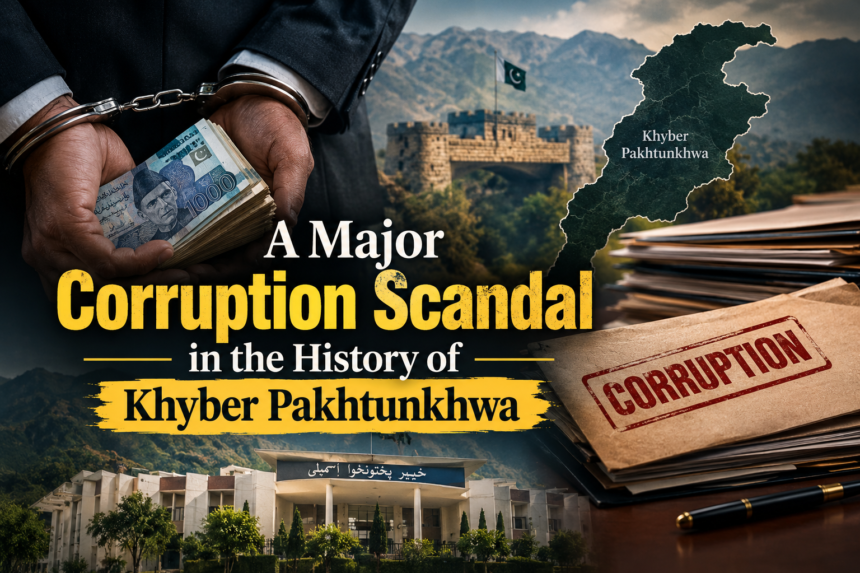
Figures do not lie. In 2010, KP had only 482 mineral licences. Under the PTI government, this number reportedly rose to 4,917.
Why was there such a dramatic increase in the number of licences? Why were licences allegedly awarded to the sons of Aleema Khan?
Why did money generated from the province’s resources allegedly find its way into the pockets of Imran Khan’s relatives and Murad Saeed instead of being deposited in the provincial treasury?
The details of these transactions under the PTI government must be made public. Court orders reportedly also exist directing the disclosure of this information. Yet those who claim to champion transparency appear reluctant to release the relevant details.
Whenever the Army demands accountability, a campaign of allegations against it begins.
PTI allegedly derives a double benefit from blaming the Army. First, it diverts attention from its own alleged corruption. Second, by obstructing military operations against terrorism, it creates conditions that can benefit terrorists.
Contracts Awarded to Aleema Khan’s Sons
When the names of the alleged beneficiaries of these contracts emerge, questions about nepotism become unavoidable. Aleema Khan and Murad Saeed are alleged to have distributed more than 300 licences among favoured individuals, associates, and handlers, reportedly in exchange for substantial commissions.
Major contracts involving Chitral Mine and Minerals are alleged to be held by Aleema Khan’s sons, Sher Shah Khan and Shahrez Khan.
Permits for Chitral’s valuable mineral resources were also reportedly issued in the names of Shahrez Khan and his wife. A substantial portion of the income generated from these resources allegedly went to Aleema Khan’s household.
The issue here is not merely the award of contracts. The fundamental question is whether public resources were allocated transparently. If the decisions were based on merit, the relevant details should be disclosed. If family connections influenced the awards, those responsible must answer for it.
KP’s mineral wealth is not the private property of the Shaukat Khanum family, to be treated as a personal estate where citizens’ questions can be dismissed as political hostility and silenced.
Nepotism in the Health Sector as Well
The issue is not confined to mineral resources. Similar questions have also arisen in the health sector.
Dr Nowsherwan Barki, who resides in the United States and is a cousin of Imran Khan, was entrusted with influential positions in KP’s health system. He also served on policy-making bodies and chaired the Board of Governors of Lady Reading Hospital.
Critics allege that family connections, rather than merit, played a role in these appointments. Questions surrounding his role in the Sehat Card programme and other major policy decisions have also become part of the wider controversy over governance and alleged corruption.
Healthcare directly affects the lives of ordinary citizens. Every citizen therefore has the right to question decisions taken in this vital sector.
If the appointments were merit-based, the evidence should be presented. If personal relationships influenced them, accountability must follow.
Those who claim to uphold merit must demonstrate that they practised it. Nepotism does not disappear simply because political slogans proclaim otherwise.
The most disturbing aspect is that PTI keeps its workers occupied with slogans, street protests, and social media battles, diverting their attention from allegations of corruption and the alleged misappropriation of public resources.
While party workers protest in the streets and fight political battles online, Aleema Khan and Murad Saeed are accused of enjoying the benefits of enormous financial gains allegedly obtained at the public’s expense. Reportedly, Murad Saeed is residing in Paktika and is the guest of the Hafiz Gul Bahadur group.
On the one hand, questions have been raised about the exercise of Dr Nowsherwan Barki’s authority in the health sector. On the other hand, mineral contracts reportedly worth billions of rupees are alleged to have been awarded to close relatives and favoured individuals.
Such allegations must be examined through official documents and records, not settled through political slogans.
The Army Is Accused—but Who Will Be Held Accountable?
By levelling allegations against the Army, PTI is accused of diverting attention from questions about the handling of mineral revenues under its own government. Aleema Khan, Sohail Afridi, and Murad Saeed are named in this political controversy.
If licences and contracts were awarded transparently under the PTI government, why are their complete details not being made public? If the allegations about contracts awarded to relatives are false, why not produce the records and provide a clear explanation?
Whenever questions arise about decisions made under its own government, silence appears to prevail. At the same time, an organised campaign was launched against the Army. This is not accountability; it is conduct that critics regard as a betrayal of the national interest.
KP’s mineral resources belong to the people of the province. The government has a responsibility to account for every rupee generated from them.
The public has the right to know the complete details of the licences and contracts allegedly awarded to Aleema Khan’s sons.
The central concern is whether revenue from the province’s mineral wealth was properly deposited in the provincial treasury or diverted into private hands.
The time has come for citizens to look beyond social media propaganda and political slogans. They must examine official records and ask who is truly responsible for answering these questions.
Any irregularities in the allocation of mineral resources must be investigated. If PTI leaders abused their authority, they too must be held accountable. Allegations against the Army must likewise be tested against verifiable evidence.
Accusing the Army does not absolve a government of responsibility for its own decisions.
Ultimately, the public’s questions are straightforward:
Who will account for the mineral licences and contracts worth billions of rupees in KP?
Who will answer for the alleged favouritism shown to close relatives and influential individuals?
Why is the Army being targeted to divert attention from these questions?
The people must now look beyond hollow slogans and unfulfilled promises. Their judgment must be based on facts, documentary evidence, transparency, and accountability.
About the Author
Brigadier (Retd) Asif Haroon Raja, SI (M) is a war veteran. He is Command and Staff Course and War Course qualified, holds an MSc in War Studies, and served as Defence Attaché in Egypt and Sudan, as well as Dean of the Corps of Military Attachés in Cairo. He commanded the largest brigade in Kashmir.
He is a defence, security, and geopolitical analyst, columnist, featured columnist of IntelDrop magazine Washington, author of five books, former Chairman of Thinkers Forum Pakistan, Patron-in-Chief of Centre for Development Studies Think Tank, Director of Meesakh Research Centre; he regularly appears on media platforms.