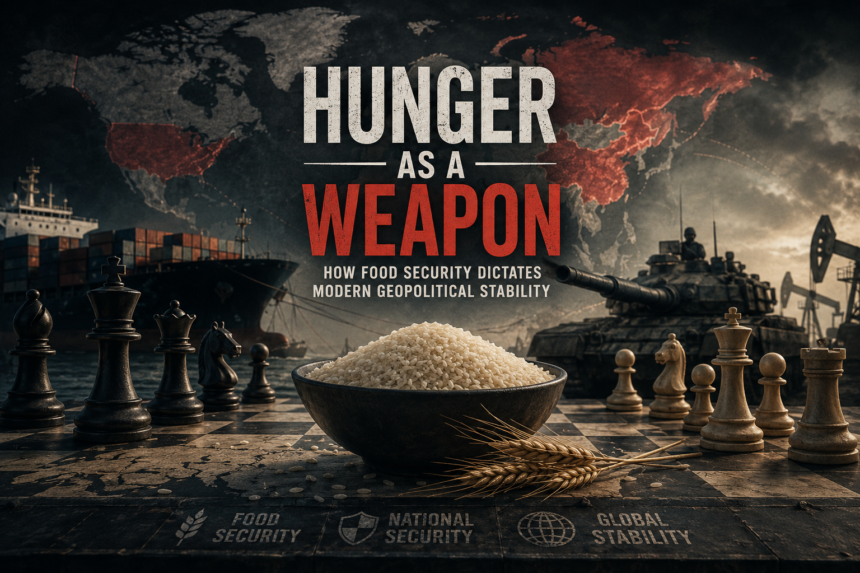

Food security has officially transcended its traditional classification as a localized agricultural or humanitarian concern, evolving into a core pillar of national security and global stability. In an interconnected global landscape, the systems responsible for feeding the human population have become highly vulnerable to external disruptions. The convergence of protracted armed conflicts, climate-induced ecological shocks, volatile energy markets, and structural supply-chain failures has turned food access into a volatile geopolitical variable. Hunger is no longer just a symptom of poverty; it has become a potent driver of civil unrest, a catalyst for mass migration, and a strategic weapon used by nations to project power and enforce political compliance.
The relationship between conflict and hunger operates as a devastating, self-reinforcing cycle. Modern warfare increasingly targets the structural foundations of food systems, with agricultural fields, grain silos, and critical maritime shipping lanes systematically blockades or destroyed to break an opponent’s resolve. This tactical weaponization of food is amplified by severe climate-induced agricultural disruptions, as shifting weather patterns, prolonged droughts, and erratic monsoons degrade arable land across the planet’s primary breadbaskets. When these environmental disruptions collide with volatile energy markets, the cost of manufacturing and transporting essential synthetic fertilizers spikes dramatically, causing an immediate drop in crop yields and triggering severe price shocks in global supermarkets.
These vulnerabilities are magnified by the high concentration of the global food trade, which relies on a small number of geographic choke points and centralized supply routes. When a geopolitical crisis or regional conflict disrupts a vital maritime strait or major shipping corridor, the ripple effects are felt instantly across the globe. In response to this vulnerability, wealthier nations have increasingly turned to food diplomacy, using strategic grain reserves and targeted food aid as diplomatic leverage to secure alliances and expand their regional influence. Conversely, this dynamic transforms food access into an asymmetric geopolitical instrument, leaving import-dependent developing nations highly vulnerable to the domestic policy shifts and export bans of major agricultural superpowers.
The domestic fallout of food insecurity in vulnerable regions is a major driver of wider geopolitical instability. When the cost of basic staples rises beyond the reach of ordinary citizens, the social contract between governments and populations rapidly dissolves, historically acting as the primary spark for mass protests, political revolutions, and state collapse. Furthermore, chronic food and water scarcity acts as a massive demographic accelerant, forcing millions of people to abandon unsustainable rural communities and migrate across international borders. This displacement frequently strains the resources and political stability of recipient nations, creating secondary geopolitical frictions that can destabilize entire regional state systems.
Building a resilient global food system requires treating agricultural health as an essential national security priority. Nations must move away from just-in-time logistics toward robust, decentralized supply chains, significantly expanding domestic storage capacities and diversifying their import dependencies. This structural transition demands substantial investment in technological innovation, including the development of climate-resilient, drought-tolerant crop varieties, advanced precision agriculture techniques that optimize fertilizer usage, and localized vertical farming infrastructure. Additionally, water security must be integrated directly into agricultural planning to protect vital transboundary river basins from geopolitical disputes.
Ultimately, sustainable global peace is entirely dependent on the creation of secure, equitable food systems. The international community can no longer afford to relegate food policy to the periphery of foreign affairs or view it strictly through a charitable lens. Multilateral institutions, such as the Food and Agriculture Organization and the World Food Programme, must be granted the diplomatic authority and financial resources necessary to insulate global food supplies from geopolitical conflicts. By treating food security as a core component of international security architecture, world leaders can dismantle a primary driver of global conflict, ensuring that the fundamental human need for sustenance becomes a source of shared stability rather than a trigger for global chaos.
About the Author: I am an independent researcher with a passion for exploring global affairs through the lens of critical thinking and evidence-based analysis. My writing examines contemporary political, economic, and strategic issues, with the aim of presenting balanced perspectives that inform, engage, and encourage meaningful discourse.