
Premise
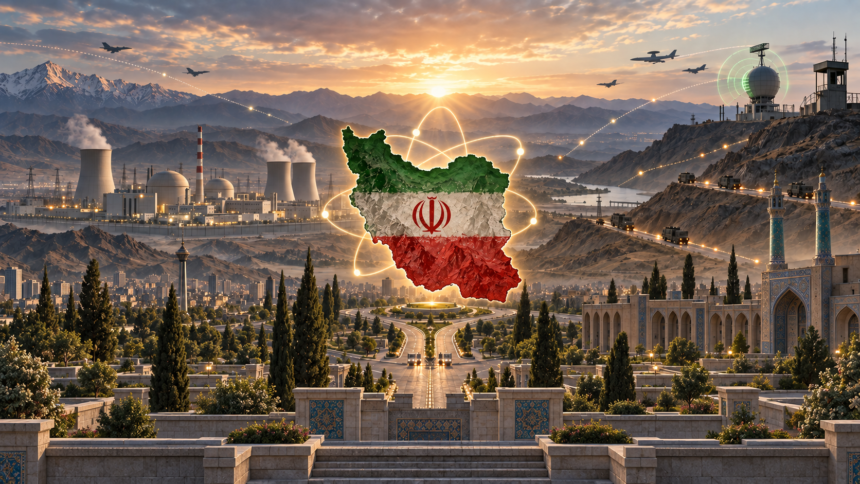
For years, Iranian leaders have maintained that Iran does not intend to manufacture nuclear weapons and that its nuclear programme is intended for peaceful purposes.
Yet the prolonged confrontation with Israel and the United States, repeated attacks on its nuclear and military infrastructure, the failure of diplomacy and the mounting pressure on its economy are gradually changing the strategic calculus in Tehran.
The central question is no longer simply whether Iran wants a nuclear bomb.
The more consequential question is whether continued military coercion may eventually convince Iran that possessing a nuclear deterrent is the only reliable guarantee of regime survival and national sovereignty.
If that happens, the strategy designed to prevent Iranian nuclearisation could paradoxically become the very factor that accelerates it.
The JCPOA and the Breakdown of Restraint
In July 2015, Iran and the P5+1 — China, France, Germany, Russia, the United Kingdom and the United States — concluded the Joint Comprehensive Plan of Action (JCPOA).
Iran accepted substantial restrictions on its nuclear activities in return for sanctions relief. These included limiting enrichment to 3.67 percent, restricting its enriched-uranium stockpile to 300 kilograms and accepting extensive international monitoring.
The agreement did not require Iran to abandon uranium enrichment altogether. Rather, it established verifiable limits designed to prevent a rapid move towards a nuclear weapon.
For a period, the arrangement worked.
However, on 8 May 2018, President Donald Trump withdrew the United States from the JCPOA and restored sanctions under the policy of “maximum pressure”.
Iran initially continued to observe the agreement but subsequently began reducing its compliance and expanding enrichment.
By 2025, Iran had accumulated uranium enriched to 60 percent—far above the JCPOA’s permitted level and much closer to weapons-grade material, conventionally defined as about 90 percent enrichment.
The Strategic Lesson is Important:
The collapse of the JCPOA did not eliminate Iran’s nuclear capability. It weakened the restraints and verification regime that had limited it.
Iran’s Missile and Drone Capability
Iran simultaneously invested heavily in ballistic missiles, cruise missiles and drones. Taking technical assistance from Russia, China and North Korea, Iran developed a strong military-industrial base to produce these weapons indigenously. A large number of scientists, engineers and technical experts were trained to carry out uranium enrichment.
Its extensive missile programme has become one of the principal pillars of its deterrence strategy.
Asymmetric Strategy
Unable to compete with the United States and Israel in conventional airpower, Iran adopted an asymmetric strategy based upon missiles, drones, dispersed infrastructure and underground facilities.
Recent reporting indicates that even after the intensive strikes of 2026, Iran has been able to resume at least limited ballistic-missile production using stockpiled components and underground facilities.
This illustrates the difficulty of eliminating a large, dispersed indigenous weapons industry through airpower alone.
The same principle applies to nuclear infrastructure. Facilities can be bombed; knowledge cannot.
Airstrikes cannot easily destroy scientists, engineers, technical expertise and industrial capacity. Even damaged infrastructure can eventually be repaired or rebuilt.
The 2025 War: Destruction Without Resolution
The Twelve-Day War of June 2025
It marked a dramatic escalation. Israel launched extensive attacks against Iranian nuclear and military facilities on the first day of the war.
An extensive network of Mossad and RAW operatives inside Iran had reportedly not only identified and marked high-value targets. Still, it had also succeeded in deploying drones, surveillance assets, and radar systems to facilitate precision strikes against Iranian scientists, senior military officers, and key civilian leaders.
The successful targeting of these individuals was followed by intensive Israeli air strikes.
A few days later, the United States launched direct strikes against Iran’s nuclear infrastructure, including the facilities at Natanz, Fordow, and Isfahan.
Washington claimed that the attacks had severely degraded Iran’s nuclear programme. Iran, however, maintained that the programme had not been destroyed.
The war ended with a ceasefire after twelve days. But the fundamental problem remained unresolved.
Iran retained its scientific knowledge, its missile capability and much of the political motivation to preserve an indigenous nuclear capability.
The February 2026 Escalation
The situation deteriorated further on 28 February 2026, when Israel and the United States launched another major campaign against Iran while indirect nuclear negotiations were still underway. The timing was particularly significant.
The attacks came after several rounds of U.S.-Iran talks mediated by Oman and conducted in Geneva. Only days earlier, the negotiations had reportedly made progress towards reducing Iran’s nuclear stockpile and moving towards lower levels of enrichment.
The military option, therefore, once again displaced the diplomatic option.
More than six months into the conflict, however, the fundamental strategic problem remains unresolved.
The United States has demonstrated enormous military superiority, but military superiority is not the same thing as achieving political capitulation.
Iran’s leadership remains in place, its missile capability has demonstrated resilience, and its willingness to resist has not disappeared.
The Hormuz Dilemma
The Strait of Hormuz has become one of the most dangerous pressure points in the confrontation.
Iran has repeatedly demonstrated that it possesses the ability to disrupt maritime traffic through the waterway.
Recent fighting has sharply reduced shipping and oil flows, contributing to a major global energy shock. Oil prices have risen above $100 a barrel, while attacks on shipping and energy infrastructure have compounded the disruption.
The importance of Hormuz goes far beyond Iran and the Gulf.
A Prolonged Disruption Affects:
*Global oil supplies.
*LNG shipments.
*Shipping insurance.
*Transportation costs.
*Food prices.
*Inflation.
*Industrial production. And
*The economies of both developed and developing countries.
Iran’s leverage is therefore asymmetric. It does not need to defeat the United States militarily to impose substantial economic costs upon the international system.
The Bab al-Mandab Front
The crisis has now acquired another dangerous dimension through the Houthi-controlled Bab al-Mandab corridor.
Recent reporting indicates that Houthi forces have captured Perim Island, a strategically important position in the Bab al-Mandab Strait, while attacks on Saudi energy infrastructure have further threatened regional energy flows.
The emergence of simultaneous pressure points at Hormuz and Bab al-Mandab presents a formidable challenge to global commerce.
The Persian Gulf and Red Sea are not isolated theatres. Together they constitute major arteries connecting the energy-producing Gulf with global markets. Any sustained disruption, therefore, has consequences far beyond the Middle East.
The Saudi–Pakistan–Türkiye Dilemma
This development creates an especially dilemma for the members of the Makkah Accord.
Saudi Arabia has a legitimate interest in protecting its territory, energy infrastructure and maritime approaches.
Pakistan and Türkiye, meanwhile, have entered into a collective defence arrangement with Saudi Arabia whose purpose is to strengthen deterrence and collective security.
But the agreement does not automatically transform every regional conflict into a war for all three countries. This distinction is crucial.
The Makkah Accord must remain a defensive deterrent rather than become an instrument through which its members are drawn into an expanding regional war.
Pakistan, in particular, must balance its strategic commitment to Saudi Arabia with its geographic proximity to Iran and its longstanding policy of avoiding unnecessary regional entanglements.
The challenge will be to provide whatever assistance the agreement requires while simultaneously working for de-escalation and a political settlement.
Drone Attack on Mecca
The reported drone attack targeting or occurring over Mecca has made the overall situation considerably more dangerous, particularly because the holy city represents a profound red line for Pakistan and the wider Muslim Ummah.
Although the Houthis have categorically denied responsibility, the incident has understandably heightened security concerns and raised questions about the identity and intent of those behind it.
Pakistan has reportedly taken appropriate precautionary measures to safeguard the sanctity and security of Mecca and to support the Kingdom of Saudi Arabia in protecting Islam’s holiest city.
Given the sensitivity of the issue, establishing the facts and the identity of the perpetrators through credible and independently verifiable evidence is of paramount importance.
The Nuclear Threshold Question
The most consequential development may not be taking place on the battlefield at all.
It may be taking place inside Iran’s strategic decision-making institutions.
Iran is now openly discussing the possibility of withdrawing from the Nuclear Non-Proliferation Treaty (NPT) and reconsidering aspects of its nuclear doctrine.
On 10 September, Iran’s Supreme National Security Council secretary, Mohsen Rezaei, criticised the latest IAEA action and warned that such pressure could encourage countries to withdraw from the NPT.
This does not establish that Iran has decided to manufacture a nuclear weapon.
But it does demonstrate that the issue has entered a much more serious phase.
If Iran concludes that:
*Diplomacy cannot guarantee its security.
*International agreements can be abandoned by successive governments.
*Its nuclear infrastructure can be attacked despite international safeguards.
*Its conventional deterrence is insufficient to prevent attacks. And
*Regime survival ultimately depends upon possessing an ultimate deterrent,
Then the strategic argument for nuclearisation becomes considerably stronger inside Tehran.
The North Korean Lesson
Iran may also be studying the experience of North Korea.
North Korea’s nuclear arsenal has made regime change vastly more complicated and raised the potential cost of military intervention.
From Tehran’s perspective, the lesson could be stark:
States that possess nuclear weapons are treated differently from states that merely aspire to them.
This does not mean Iran will necessarily follow the North Korean path.
Iran has historically valued strategic ambiguity and has repeatedly maintained that it does not seek nuclear weapons. But continued attacks could alter that calculation.
The Paradox of Maximum Pressure
This creates a profound strategic paradox for Washington and Jerusalem. The declared objective is to prevent Iran from acquiring nuclear weapons.
Yet if military attacks, sanctions and diplomatic pressure persuade Tehran that nuclear weapons are essential for its survival, the policy may produce the opposite result.
The more Iran fears regime change, the greater the incentive to acquire an ultimate deterrent.
And once a country reaches that conclusion, bombing its nuclear facilities may not eliminate the ambition. It may deepen it.
Could Iran Actually Build the Bomb?
Iran possesses much of the technological foundation required for a potential nuclear breakout, but possessing enriched uranium is not the same thing as possessing a deployable nuclear weapon.
A functioning weapon requires additional steps, including weaponisation, suitable explosive systems, a delivery mechanism and reliable command-and-control arrangements.
Therefore, claims that Iran can simply assemble a bomb overnight should be treated cautiously.
Nevertheless, the concern is serious because Iran has accumulated substantial enrichment expertise and stockpiles of highly enriched uranium. The more the international verification system is weakened, and the more facilities are driven underground, the greater the uncertainty surrounding the programme.
Strategic ambiguity itself can become a form of deterrence.
Iran may not need to announce that it possesses a nuclear weapon. It may seek to reach a position where adversaries believe that it could produce one rapidly if threatened.
The NPT Withdrawal Option
Withdrawal from the NPT would be a watershed.
Iran would face enormous diplomatic and economic consequences if it took such a step. But from Tehran’s perspective, the argument could be that remaining within a treaty regime while its nuclear facilities are attacked provides insufficient security. That argument is gaining visibility.
The fact that Iranian political figures and some Friday prayer leaders are publicly discussing NPT withdrawal does not mean that a final decision has been made. But it indicates that an option previously considered politically difficult is now entering mainstream strategic debate.
That should concern the international community. Because once the NPT begins to lose its credibility in the Middle East, the consequences could extend far beyond Iran.
Saudi Arabia, Türkiye and other regional powers would inevitably reassess their own security calculations.
A nuclear Iran could therefore trigger a regional proliferation cascade.
The Dispute Over Iran’s Nuclear Weapons Is Escalating
For the past two days, the United States has been alarmed after hearing that Iran is preparing to bring a motion before the Iranian Parliament to withdraw from the Nuclear Non-Proliferation Treaty (NPT), which would allow it to possess nuclear weapons. There are also reports that it will soon conduct a nuclear weapons test.
This has alarmed the United States, as American officials have reportedly been pleading with and persuading Iran to return to the negotiating table to resolve the nuclear issue.
The U.S. Energy Secretary was reportedly heard offering an incentive to Iran, saying that if Iran cooperates, America will support it with energy at its nuclear power plant. But Iran has not said a word in response.
The U.S. turned to the United Nations, but unfortunately, it was too late. America presented a resolution seeking to have Iran allow inspections of its nuclear facilities or face punishment.
As the vote was being taken, China and Russia rejected the resolution, leaving no way for the United Nations to carry out an investigation or impose punishment on Iran.
Now, reports have emerged that intelligence agencies have confirmed to the world that Iran has developed and prepared its nuclear weapons program, along with its ballistic missile program, at its underground nuclear facilities.
This is a major threat to the United States and Israel, considering that they are Iran’s main enemies.
Iran has proven difficult to defeat. Attempts to weaken it through military power have failed, and there is no way to punish it through the United Nations. America has lost its leverage over Iran.
Conclusion
The World May Be Approaching a Dangerous Crossroads
The Iranian nuclear question has now moved beyond the technical issue of uranium enrichment.
It has become a question of deterrence, sovereignty, regime survival and strategic credibility.
The United States and Israel may believe that sufficient military pressure will eventually force Iran to surrender its nuclear ambitions.
Iran may reach the opposite conclusion that surrendering its nuclear option would leave it permanently vulnerable to future attacks. That is the dangerous crossroads.
If diplomacy is allowed to fail, if the NPT is abandoned, if inspections disappear and if Iran concludes that only a nuclear deterrent can protect it, the Middle East could enter an entirely new and far more dangerous strategic era.
The objective of the international community should therefore not simply be to prevent Iran from building a bomb. It should be to create conditions under which Iran has less incentive to build one.
That requires credible security assurances, verifiable nuclear restrictions, meaningful diplomacy and a regional security framework capable of addressing the legitimate concerns of all major regional states.
Military power can destroy facilities. It cannot destroy an idea once a nation becomes convinced that its survival depends upon it.
The greatest strategic danger today is therefore not necessarily that Iran has already decided to become a nuclear power.
It is that continued coercion may eventually persuade Iran that it has no alternative.
The author, Brigadier (Retd) Asif Haroon Raja, SI (M), is a war veteran. He is Command and Staff Course and War Course qualified, holds an MSc in War Studies, and served as Defence Attaché in Egypt and Sudan, as well as Dean of the Corps of Military Attachés in Cairo. He commanded the largest brigade in Kashmir. He is a defence, security, and geopolitical analyst, columnist, featured columnist for IntelDrop magazine in Washington, author of five books, former Chairman of the Thinkers Forum Pakistan, Patron-in-Chief of the Centre for Development Studies Think Tank, and Director of the Meesakh Research Centre; he regularly appears on media platforms.