
Middle Eastern Instability and the Vulnerability of Pakistan’s Economic Recovery
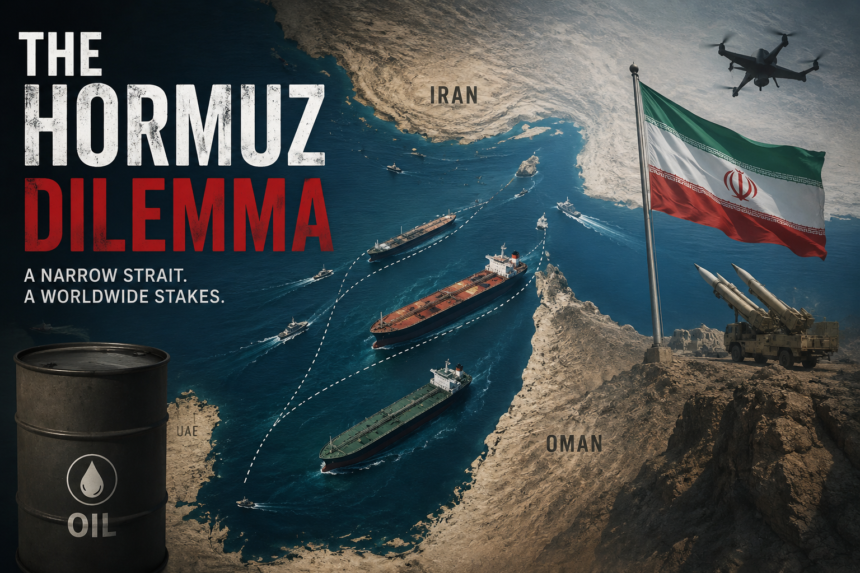
The maritime corridors of the Persian Gulf have once again become the epicenter of global geopolitical friction. Following months of escalating regional hostilities, the hypothetical vulnerability of the Strait of Hormuz has crystallized into a major maritime crisis. Iran’s enforcement of restrictive transit regulations, alongside debates over localized waterway tariffs, has triggered an acute supply-side shock to global energy markets. For a highly import-dependent state like Pakistan, this disruption represents a direct threat to its macro-fiscal stability. This maritime blockade hits Islamabad at an exceptionally delicate juncture. Over the past year, Pakistan has pursued a fragile economic stabilization program closely monitored by the International Monetary Fund (IMF), yielding a modest GDP rebound and a steady contraction in headline inflation. However, this domestic cooling remains deeply vulnerable to external shocks. Because Pakistan relies on Gulf Cooperation Council (GCC) markets for over four-fifths of its petroleum products and roughly half of its total inward remittances, any prolonged closure of the Strait of Hormuz directly threatens to derail its hard-won recovery.
The current crisis exposes a fundamental, structural weakness in Pakistan’s macroeconomic framework: the severe geographic concentration of its critical energy and financial inflows. When maritime traffic stalls at this critical chokepoint, the impact is felt far beyond delayed oil tankers. It fundamentally unbalances the revenue and expenditure assumptions underpinning Islamabad’s federal budget. Historically, global oil price shocks forced Pakistani governments to make a difficult political choice: shield consumers by funding unsustainable domestic fuel subsidies or pass the costs along and trigger runaway inflation. Under current IMF structural benchmarks, that fiscal discretion no longer exists. Islamabad is legally bound to an automatic, fortnightly market-alignment mechanism for petroleum pricing. Consequently, the rising risk premiums in the Gulf are transferred directly to local consumers within days. While this shield protects the state’s primary fiscal balance from ballooning deficits, it simultaneously suppresses industrial activity and raises operational costs for the agricultural sector.
Beyond crude oil dependencies, the blockade has severely disrupted Pakistan’s natural gas supply chain. Paradoxically, prior to this escalation, the state was dealing with an oversupply of Liquefied Natural Gas (LNG) driven by rigid, long-term take-or-pay contracts signed with Qatar. This structure created a costly domestic surplus that the state struggled to manage. The effective closure of the Strait has inverted this challenge from a financial inefficiency into a severe supply shortage. While the widespread adoption of decentralized rooftop solar has partially insulated the residential power sector from systemic blackouts, large-scale manufacturing remains heavily dependent on gas. With Gulf shipping lines facing operational paralysis, Islamabad faces an immediate logistical bottleneck. The state must navigate contractual non-performance penalties for undelivered shipments while scrambling to source highly expensive spot-market alternatives from outside the Gulf region.
Simultaneously, a secondary shock is developing along the western rim of the Arabian Sea. The economic fallout of the Hormuz crisis is rapidly affecting the domestic markets of Saudi Arabia, the UAE, and Qatar. These economies host millions of Pakistani expatriates whose financial transfers serve as the primary buffer for Pakistan’s balance of payments. Should regional instability cause Gulf corporate entities to scale back infrastructure spending, remittance inflows—which constitute approximately 9 percent of Pakistan’s GDP—could contract. The combined impact of elevated energy import costs and diminished remittance revenues risks rapidly depleting the State Bank of Pakistan’s foreign exchange reserves, unwinding months of careful reserve accumulation.
Faced with these compounding economic pressures, Pakistan’s diplomatic flexibility is severely constrained. Islamabad cannot risk alienating its traditional bilateral patrons in Riyadh and Abu Dhabi, both of whom are navigating direct security challenges in the region. Conversely, sharing a volatile 900-kilometer border with Iran makes it strategically imperative for Pakistan to avoid participating in any Western-led maritime coalitions aiming to clear the shipping lanes by force. Accordingly, Pakistan’s diplomatic response has focused on cautious neutrality. By quietly advocating for de-escalation between Washington and Tehran, Pakistani diplomats are acting out of pure economic self-preservation. While maintaining open communication channels with all regional actors is vital to prevent absolute isolation, strategic neutrality alone cannot protect domestic supply chains from external shocks.
To safeguard its domestic recovery against prolonged Middle Eastern instability, Pakistan must transition from reactive crisis management to a proactive policy framework. First, the Ministry of Energy should immediately engage Qatari authorities to negotiate temporary destination-flexibility clauses in existing LNG agreements. Allowing blocked or excess cargoes to be diverted and resold to East Asian hubs on a Net Proceeds Differential basis would shield Pakistan from costly under-delivery penalties. Second, the state must aggressively diversify its energy supply routes. While the Persian Gulf remains the most cost-effective energy source due to geographical proximity, the state must establish emergency, land-based supply frameworks with non-Gulf producers, particularly Azerbaijan and Central Asian states, to reduce its total reliance on maritime chokepoints. Third, rather than treating the rapid private adoption of solar energy as a threat to national utility revenues, the National Integrated Energy Plan must formally integrate industrial-scale battery storage into the national grid. Lowering the baseline demand for imported fuel oil and imported gas is the most viable path toward long-term macroeconomic insulation.
The current impasse in the Strait of Hormuz demonstrates that Pakistan’s economic security cannot be decoupled from broader regional shifts. Lasting economic sovereignty requires more than balanced fiscal accounts and compliance with international lending programs; it demands structural resilience against external supply shocks. Until Islamabad systematically diversifies its energy supply routes and reduces its reliance on a single, vulnerable maritime corridor, its domestic economic stabilization will remain highly vulnerable to external geopolitical disruptions.