

Asif Haroon Raja
Role of Collaborators
No external adversary can succeed without support from internal collaborators. This bitter truth has been repeatedly demonstrated throughout history and finds particular resonance in the experience of the Muslim world.
Could militant organizations such as the TTP, BLA, and BLF, or groups such as the PTM, BYC, and JAAC, which serve as their political or ideological fronts, remain active and effective without the political space, logistical support, intelligence, funding channels, and safe havens provided by sympathetic political actors, sub-nationalist elements, and facilitators?
Terrorist networks do not operate in isolation. Funds, information, and resources reach them through handlers and facilitators, while foreign intelligence agencies employ them as proxies to advance their strategic agendas.
Are we unaware of the larger geopolitical game being played around us, the hostile forces involved, their objectives, and the methods they employ to destabilize states that resist their designs?
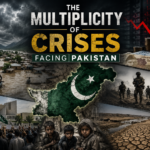
Pakistan is among the countries that have suffered most from externally sponsored terrorism, proxy warfare, and covert conspiracies.
Policy of Appeasement
A major reason has been the State’s recurring tendency toward appeasement, selective enforcement of laws, and reluctance to uphold rules and regulations without fear or favour.
For successive governments, a key test often appeared to be how effectively they could keep India, Afghanistan, and the United States satisfied. In the pursuit of political survival, national interests and sovereign prerogatives were at times compromised.
This moral and political weakness was duly exploited by our adversaries, who also capitalized on our social and political vulnerabilities.
Transformation to Hard State
Today, however, a new phenomenon is emerging—a growing refusal to submit to external pressure and coercion.
Our adversaries are finding it difficult to reconcile themselves to this changing reality, and their frustration is increasingly evident.
Defenders of Soft State
At the same time, there are voices within our own ranks who remain committed to the old policy of one-sided accommodation and endless reconciliation, arguing that such an approach is necessary for national stability.
To them, a soft State is preferable to a strong and resolute one. If struck once, they would have us offer the other cheek rather than defend our dignity and interests.
Such a mindset risks reducing a sovereign nation to a position of perpetual submission.
Pakistan Paid a Price
Pakistan paid a heavy price while dutifully adhering to the externally imposed policy of “Do More.” We bled profusely in a war that was not entirely our own.
The lesson is not that sacrifice should cease, but that it should serve a just and honourable purpose.
If we must endure hardship, let it be while defending our sovereignty, confronting our enemies, and dismantling their proxy networks. Such a struggle, though costly, is far more honourable than passive submission.
Kashmir: A Test of State Authority and National Cohesion
A Dangerous Agenda
What has been unfolding in Kashmir in recent days is not merely a spontaneous public reaction. It is certainly part of a deeper, carefully orchestrated, and potentially dangerous agenda.
Those who seek to provoke innocent Kashmiris in the name of identity cards, passports, and so-called “freedom” are gradually revealing their true intentions.
What Should the State Do?
The question is, for how long will the State
remain silent? Should it close its eyes towards all those raising the slogans of grievances and rebelling against the state?
If anyone can rise today, invoke public grievances, and encourage defiance against the State, then similar movements could emerge tomorrow in Khyber Pakhtunkhwa, Sindh, Gilgit-Baltistan, and Balochistan.
Would such a never ending cycle not risk plunging the country into uncontrollable chaos and anarchy and lead to fragmentation?
Options Available
The State now faces two choices:
Either allow complete freedom of separatist expression and action—which would ultimately undermine the very foundations of the state; or
Reassert and enforce its writ and authority to safeguard the country’s integrity and sovereignty, because failure to do so could place national cohesion and stability at risk.
It should be remembered that movements for independence are not built merely on slogans, agitation, or emotional appeals, nor is freedom handed to anyone on a silver platter.
Where Do the Threads of the Conspiracy Lead?
It is important to examine the motivations behind the current developments. India, under Prime Minister Narendra Modi, is confronting internal challenges, including unrest in Manipur and concerns regarding the Khalistan movement.
The Indian leadership is still licking the wounds of its humiliation it suffered in the four-day war against Pakistan, and is desperate to avenge its defeat.
Finding the Indian military incapable of launching Sindhoor-2, India is seeking to exert pressure on Pakistan by simultaneously playing the “Kashmir card”, while also encouraging networks such as the BLA and TTP, and making use of Afghan soil for cross border terrorism in Khyber Pakhtunkhwa and Baluchistan.
AJK has been chosen as the third front, and the Awami Action Committee, an additional proxy to maximise pressure on Pakistan.
Narendra Modi’s statement that “Pakistani Kashmir will one day join India on its own”, highlights his malafide intentions.
The elements within the Indian leadership openly discuss separating Kashmir from Pakistan in order to weaken Pakistan strategically.
Suspending the Indus Water Treaty and threatening to close the water flow in the three Pakistan-specific rivers to turn Pakistan barren, and to force it to beg for every drop of water, highlights the deeper conspiracy and a sinister geopolitical design of India.
The Bond Between Kashmir and Pakistan
Those promoting the “Kashmir card,” are creating a potentially dangerous situation within the country.
What would happen if, God forbid, voices were to emerge within Pakistan calling for Kashmiris to be treated in the same manner as Afghan refugees have been treated at various times? What consequences would follow?
Such an outcome is unlikely because the relationship between Pakistan and Kashmir is not based merely on slogans. Pakistan has shed blood for the Kashmir cause and Pakistanis have made enduring sacrifices which cannot be erased from history by any group or individual.
The Need for Vigilance
The time has come for ordinary Kashmiris to recognize those who, under the banner of rights and grievances, may be seeking to distance them from Pakistan, while drawing them closer to India’s sphere of influence.
The State must uphold its authority without hesitation or expediency, because the issue is no longer viewed merely as a political dispute. Rather, it is a matter touching upon Pakistan’s national unity, stability, and long-term survival.
About the Author
Brigadier (Retd) Asif Haroon Raja, SI (M) is a war veteran. He is Command and Staff Course and War Course qualified, holds an MSc in War Studies, and served as Defence Attaché in Egypt and Sudan, as well as Dean of the Corps of Military Attachés in Cairo.
He is a defence, security, and geopolitical analyst, international columnist, author of five books, former Chairman of Thinkers Forum Pakistan, Patron-in-Chief of Centre for Development Studies Think Tank, Director of Meesakh Research Centre; he regularly appears on media platforms.