
Asif Haroon Raja
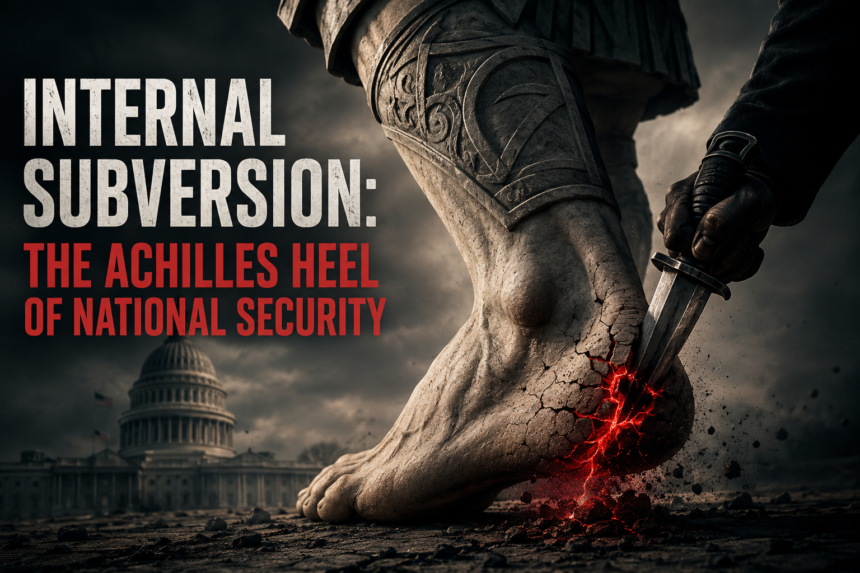
History teaches a harsh but enduring lesson: no external enemy can achieve its objectives without assistance from within.
Betrayal, subversion, and collaboration with hostile forces have often proven more dangerous than direct military aggression.
This reality is particularly evident in the history of nations confronted by prolonged external threats.
In Pakistan’s case, the challenge is compounded by the hybrid warfare being waged by hostile actors, particularly India and, at various times, elements operating from Afghan soil. The threat escalated when Israel teamed up with India and Afghanistan to destabilize Pakistan. Reportedly, the UAE has been secretly funding BLA and TTP to offset the development of Gwadar Port. The possibility of the US backing anti-Pakistan elements cannot be ruled out.
The use of proxies, disinformation campaigns, economic pressure, and support for separatist or terrorist networks has become a preferred instrument of statecraft against Pakistan.
One must ask whether terrorist organizations such as the TTP or separatist militant groups could sustain their activities without facilitators, sympathizers, financiers, and logistical supporters operating within the country.
Terrorist violence does not occur in a vacuum. It requires funding channels, safe havens, intelligence leaks, recruitment networks, propaganda platforms, and political space.
Foreign intelligence agencies have historically exploited local grievances, weak governance, and internal divisions to cultivate proxies that serve external agendas while disguising their true sponsors.
Pakistan has paid an exceptionally heavy price for this phenomenon. Tens of thousands of civilians and security personnel have sacrificed their lives in a war largely fuelled by externally sponsored terrorism.
Yet the damage has often been magnified by our own weaknesses: political expediency, lack of national cohesion, selective application of the law, and a tendency to appease disruptive elements rather than confront them through constitutional and legal means.
For decades, successive governments were frequently judged by how effectively they could maintain favourable relations with powerful external actors, sometimes at the expense of national interests and strategic autonomy.
It has been an utmost desire of each and every civil and military regime of Pakistan to keep India, Afghanistan and the USA friendly irrespective of the cost paid.
Pakistan paid a staggering price—more than 80,000 lives lost and over US$150 billion in economic damage—while prosecuting the US-imposed War on Terror and adhering to Washington’s persistent “Do More” diktats.
Far from being rewarded for its sacrifices, Pakistan often found itself subjected to further demands, criticism, and pressure, despite bearing one of the heaviest human and economic costs of the conflict.
This tendency of one-sided appeasement created vulnerabilities that adversaries readily exploited. Internal fault lines were widened, social divisions aggravated, and pressure tactics employed to influence Pakistan’s security and foreign policy choices.
Today, however, Pakistan appears increasingly determined to resist external coercion and safeguard its sovereignty. This shift has understandably unsettled those who benefited from Pakistan’s earlier posture of accommodation and compliance.
Equally, there remain voices within the country who continue to advocate a policy of unilateral concessions and endless reconciliation, believing that a soft state guarantees stability.
Experience suggests otherwise. Excessive accommodation of violent actors, foreign-sponsored proxies, or anti-state elements rarely produces peace; more often it emboldens aggressors.
A state cannot preserve its sovereignty, territorial integrity, and constitutional order by repeatedly yielding to coercion. Peace remains the preferred objective, but peace without deterrence is merely an invitation to further aggression.
Pakistan’s challenge, therefore, is to strike a balance between democratic freedoms and national security, between political inclusiveness and the uncompromising enforcement of law.
The struggle against terrorism, separatism, and foreign-sponsored subversion is not merely a military contest; it is a battle for national cohesion, institutional strength, and strategic resilience.
The lesson is clear: nations are weakened not only by the power of their enemies but also by the divisions and vulnerabilities within.
A united nation governed by law, confident in its sovereignty, and vigilant against internal subversion is far better equipped to withstand external aggression than one divided by appeasement, complacency, or partisan interests.
About the Author
Brigadier (Retd) Asif Haroon Raja, SI (M) is a war veteran. He is Command and Staff Course and War Course qualified, holds an MSc in War Studies, and served as Defence Attaché in Egypt and Sudan, as well as Dean of the Corps of Military Attachés in Cairo.
He is a defence, security, and geopolitical analyst, columnist, featured columnist of IntelDrop magazine Washington, author of five books, former Chairman of Thinkers Forum Pakistan, Patron-in-Chief of Centre for Development Studies Think Tank, Director of Meesakh Research Centre; he regularly appears on media platforms.